
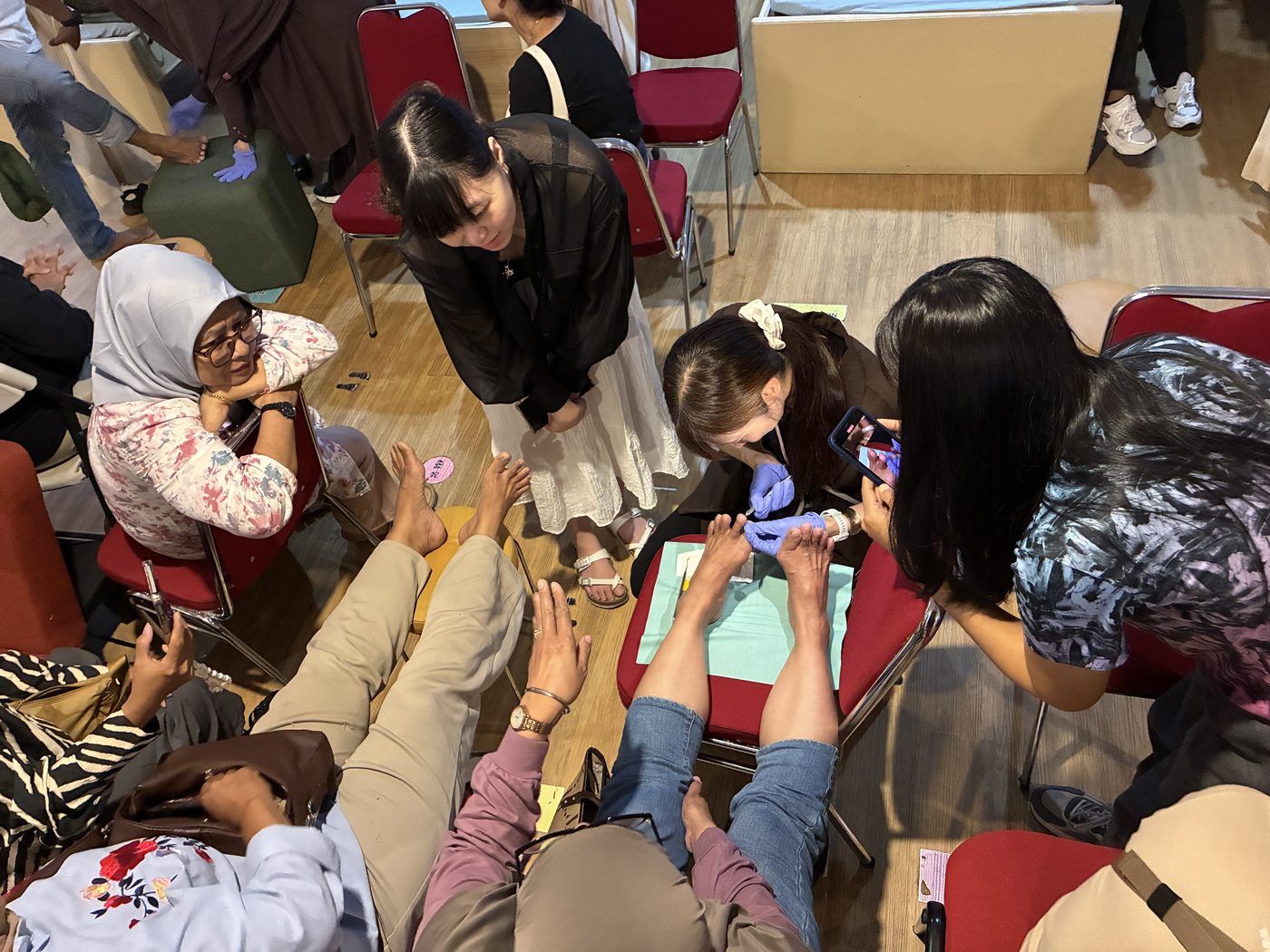
At Klinik Budhi Dharma (KBD) in Jakarta, Indonesia, we ran foot-care training for staff and provided foot care for patients.
Joining us from Japan was Yuko, a nurse with many years of clinical experience in foot care. She is a certified wound, ostomy and continence nurse, a Certified Diabetes Educator of Japan, and a certified foot-care instructor and podiatric specialist. She has advised us on our business and on foot care since before Second Heart was founded.
This was not planned as a one-off overseas training session. We are currently running a proof of concept (PoC) in Indonesia for a system that leads to early detection and prevention of foot disease.
Within that work, we saw the next need clearly: to connect finding foot problems with technology and being able to protect feet locally once those problems are found.
The people we need beyond the PoC
With Steplife, we are building a way to keep checking the condition of patients’ feet and catch changes early. But finding a problem does not, by itself, protect a patient’s foot.
- “Is it safe to treat this foot?”
- “Should we refer to a doctor?”
- “How far can we cut this nail?”
- “Can we pare down this hard skin?”
- “How does this patient live day to day?”
Real foot care needs the judgement that comes from looking at the foot, touching it and listening to the patient.
That is why we don’t want to take only technology overseas. We want to build a system in which local healthcare workers look at feet themselves, think for themselves, and connect patients with the right care or medical treatment. These two days were the first step towards that.
Starting with looking at feet
We ran training for nurses and staff from KBD and nearby facilities. The morning was classroom learning.
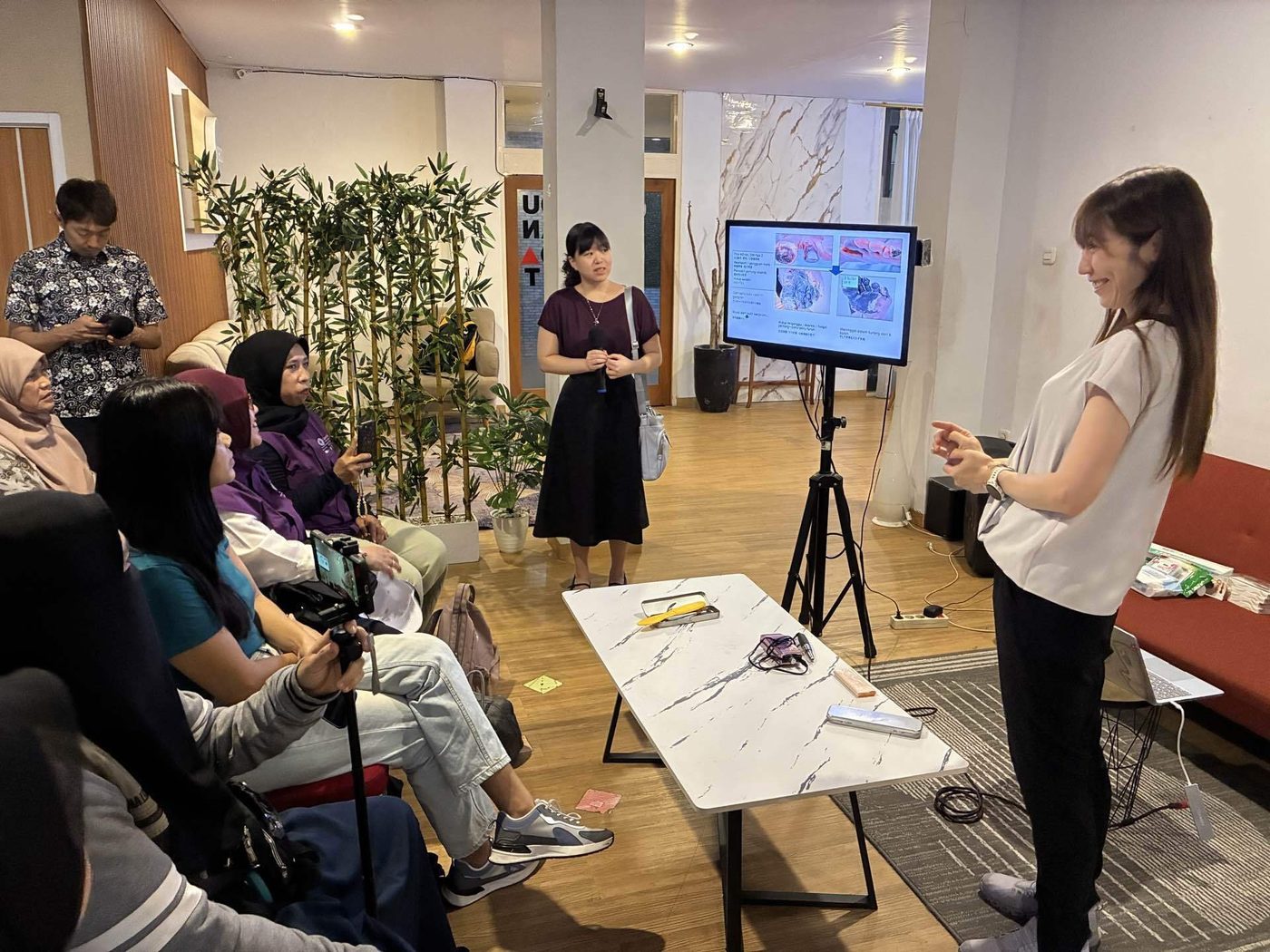
We covered which patients’ feet need particular attention, such as people with diabetes, peripheral arterial disease, kidney failure or on dialysis, and older people. Then we learned how to find high-risk feet from three angles: can’t feel, won’t heal and can’t see.
Foot care is often associated with techniques such as cutting nails and paring hard skin. But what we valued most this time was not the treatment itself.
Look. Touch. Listen.
Skin colour, temperature, wounds, nails, swelling, differences between left and right, how shoes are chosen and worn, and how the person walks. And asking the patient: “Since when?”, “What bothers you most?”, “What do you usually wear on your feet?” Looking not just at the foot but at the person’s life is where foot care starts.
One of the things Yuko said during the training was: “A foot is that person’s résumé.”
The position of calluses, the shape of the nails, the condition of the skin. As you touch someone’s feet, you gradually see what work they have done, what shoes they have worn, how they walk and how they have lived. Foot care is not simply about making feet clean. It supports a person’s whole life, so they can keep on walking.
Looking, touching and thinking in practice
Participants examined each other’s feet and practised basic assessment:
- Checking the skin and nails
- Feeling the temperature of the feet and differences between left and right
- Checking for swelling
- Checking blood flow and nerve damage
- Asking the person about the condition of their feet
Here too, learning techniques was not the only goal. There was one more thing we kept in mind.
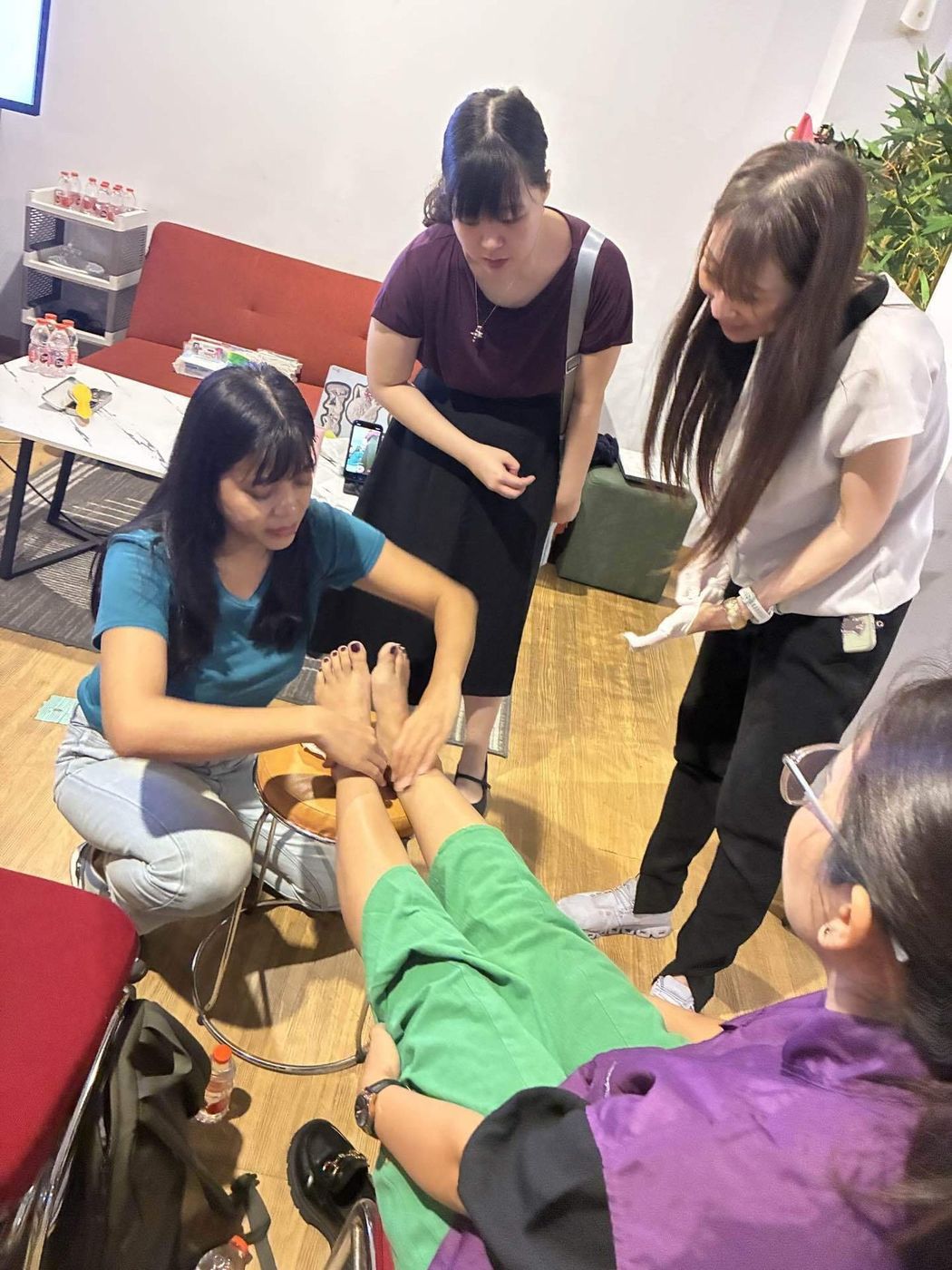
Not bringing Japanese foot care to Indonesia unchanged. Religion, footwear, the habit of going barefoot, living conditions, access to healthcare, who cares for feet at home: the environment in Japan and Indonesia is different.
So in the training we said: “We didn’t come to teach the Japanese way. We’d like you to teach us about Indonesian patients and healthcare, too.” Rather than teaching a “correct method” that won’t last locally, we build methods that can last, together with local people. This is the thinking we want to hold on to as we expand overseas.
The goal isn’t just tidy feet
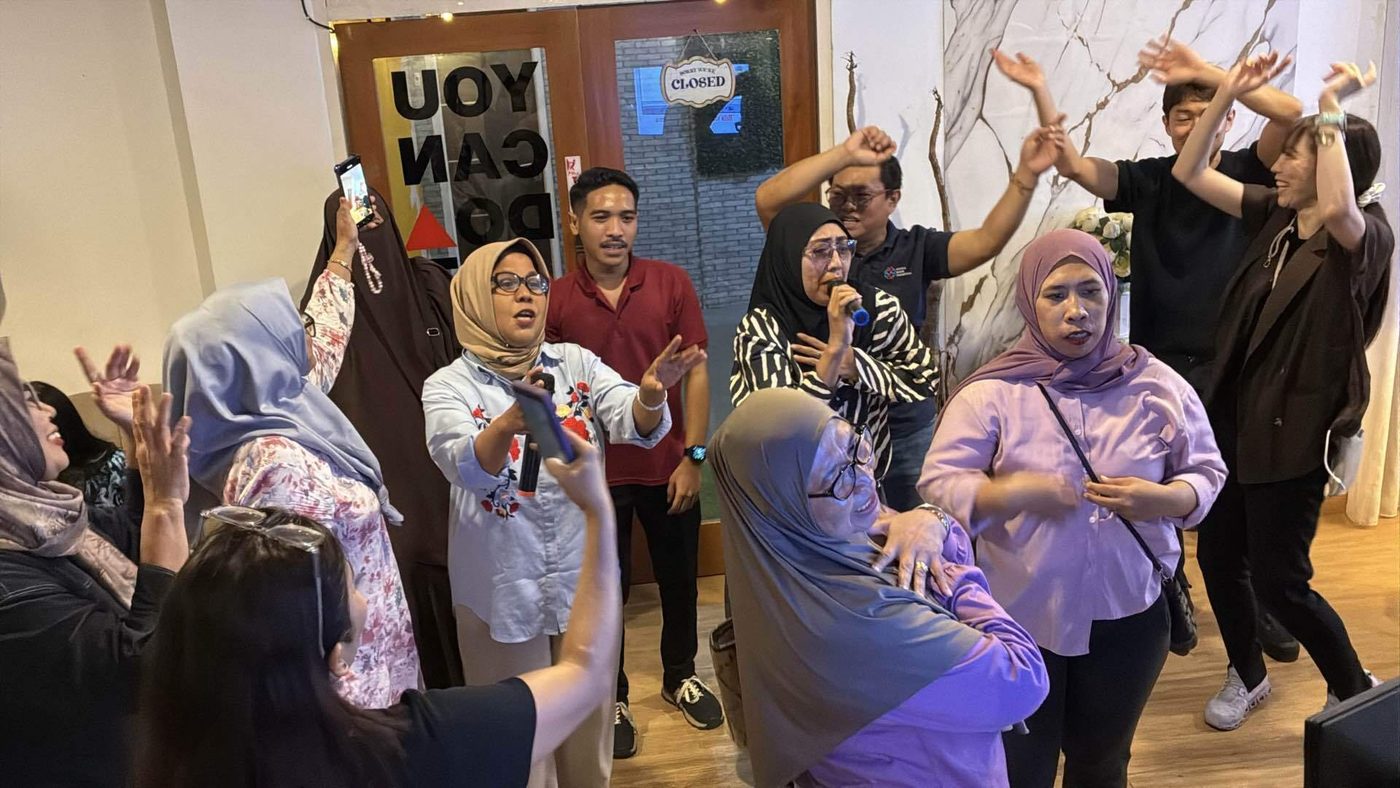
At the end of the training we all sang and danced together. Working with such positive, cheerful people makes it clear: the goal is not to cut nails perfectly.
Can this person walk with these nails? Can they wear footwear on these feet? Can they enjoy life?
If thick, deformed nails make it impossible to wear footwear, people go out less. They might not be able to dance like in the photo. When people walk less, their whole life changes. So looking after feet is also care that protects a person’s life from the ground up.
Gathered around a patient, KBD staff watched Yuko’s hands intently. Some filmed on their phones, some leaned in close to see the technique, some asked questions and some tried it themselves. Rather than an expert from Japan doing treatments and leaving, it became time for local staff to learn to do it themselves next time.
A certificate to finish
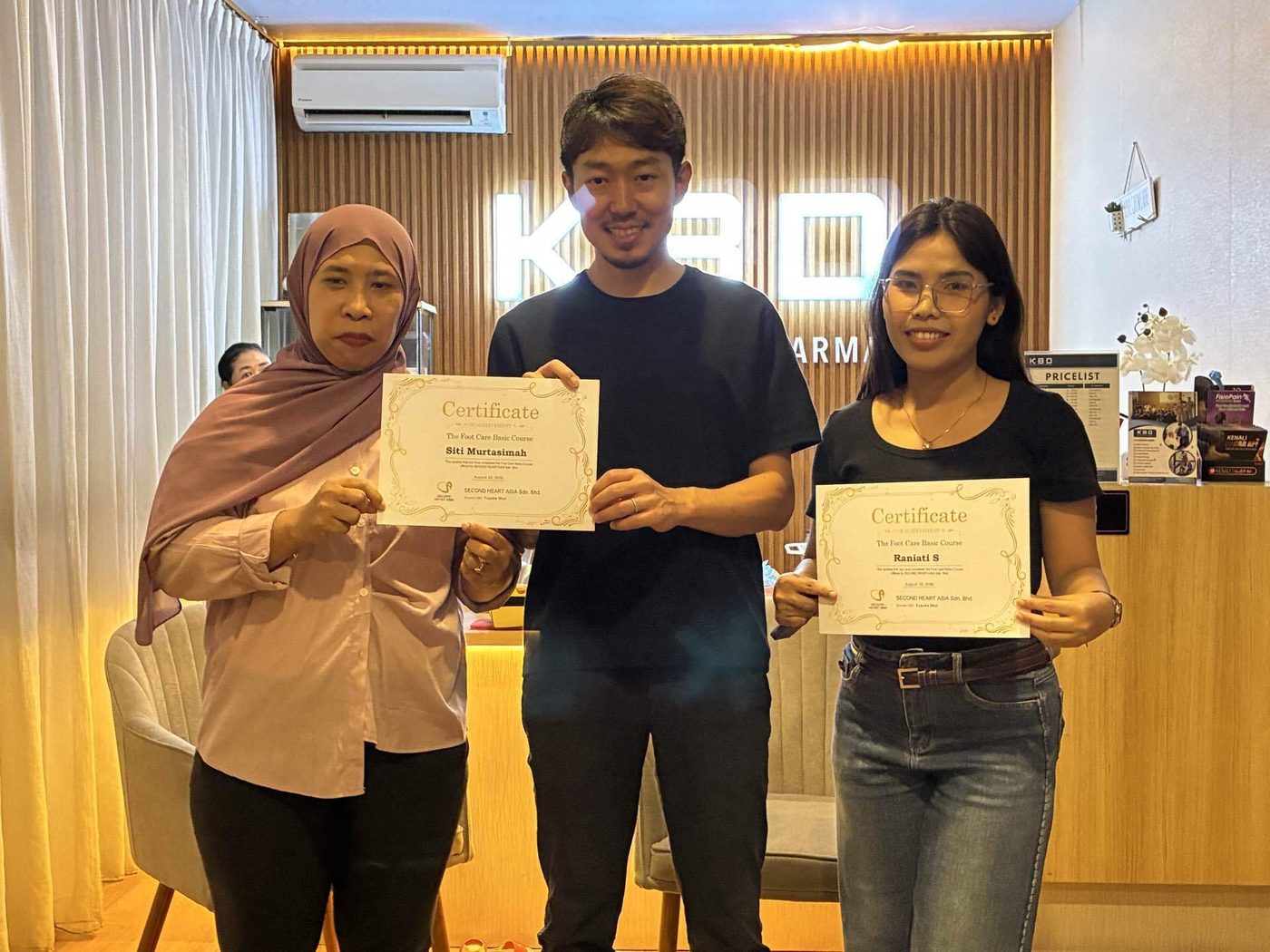
After the two-day programme, we presented participants with certificates of completion. Of course, no one masters foot care in two days, and the certificate doesn’t mean the training is finished. It is the start of growing the number of people who look after feet locally.
After the training: how to keep it going as a business
This was the other important part of our stay in Jakarta. After the training, we discussed with KBD’s management the business model for after the current PoC ends: not stopping at a trial, but asking how this can work as a lasting system to protect feet in Indonesia.
- Monitoring with Steplife
- Foot care at KBD
- A pathway to refer patients who need it to the clinic
- Training for local staff
- And how to make all of this work as a sustainable service
Drawing arrows all over a sheet of paper, we discussed a shape that could actually run locally. We are still in the middle of the PoC, and the business model is still to be tested, so we won’t call it a success yet. But over these two days, a view that wasn’t there when the PoC started has begun to come into sight.
Technology alone can’t protect feet
Until now we have developed technology that leads to early detection of foot disease. But this trip reminded us that technology alone cannot protect people’s feet.
There need to be people who look at feet, people who notice changes, people who can provide care, and people who refer dangerous feet to medical care, with technology supporting them. Only when all of this is connected does it become a system that protects feet.
Our goal is not to bring a foot-care nurse from Japan every time. It is for local people to protect local patients’ feet, and to leave behind the education, technology and business structures that make that possible. That is what we want to build overseas as a start-up.
Thank you
Thank you to everyone at Klinik Budhi Dharma who worked with us, to the patients and community members who took part, and to Yuko for coming all the way from Japan to Jakarta.